Vermonters vote on House and governor as national House balance hangs by three seats
Burlington voters head to the polls today to decide the state's single congressional district and the governor's race, while the national fight for the U.S. House narrows to a three-seat margin that will determine control of Congress for the next two years.
By Sophie Lawson ·
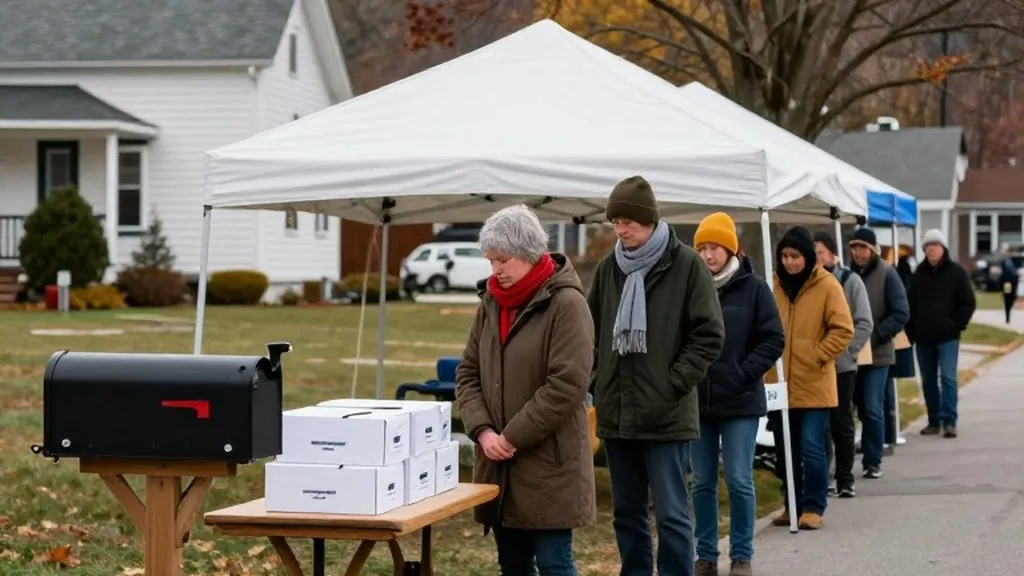
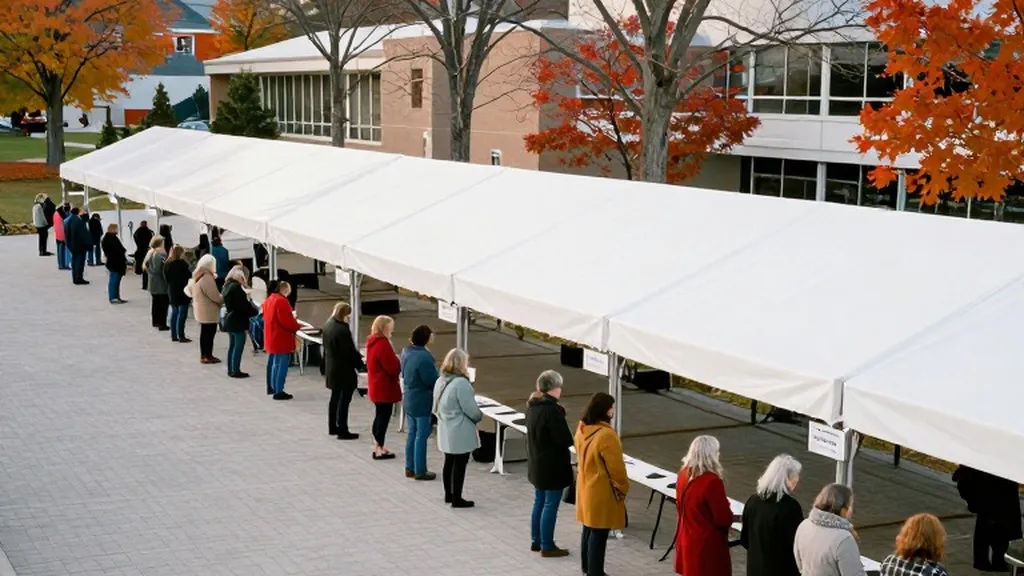
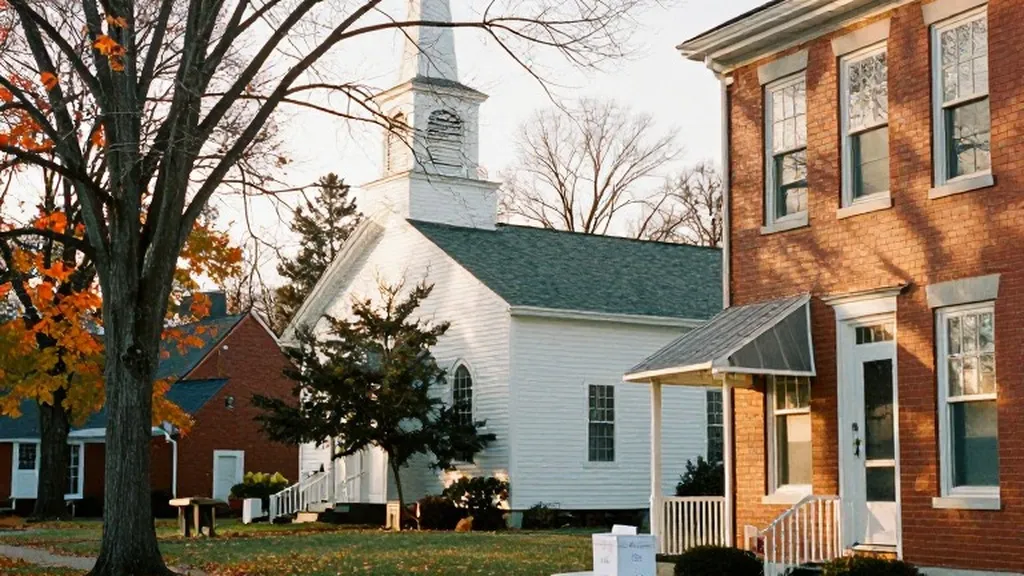
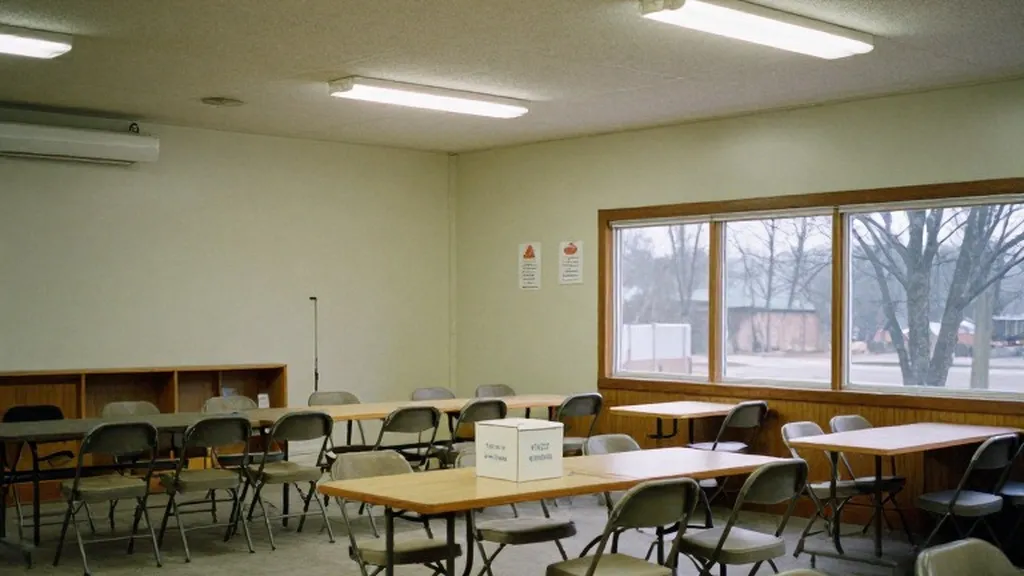
In Burlington, polls open between 5 and 10 a.m. and close at 7 p.m. today for the general election. Residents will cast ballots for the state's sole U.S. House seat, the governor's office, and various state and local measures. Vermont conducts its elections largely by mail, but in-person voting remains available at designated locations throughout the county. The Associated Press notes that more than 57 million people had already voted as of Monday, surpassing early vote totals from four years ago in many closely watched states. This high level of advance participation is part of a broader national trend where voters are seeking to shape the direction of the government halfway through President Donald Trump's second term.
The central question for Burlington voters is who will represent the state in the U.S. House of Representatives. The seat is currently held by Democratic incumbent Becca Balint, who faces a Republican challenger and several independent candidates. According to Ballotpedia, the Democratic, Green, and Independent parties are all represented on the ballot for this federal race. The outcome of this contest contributes to the national tally for the House, where all 435 seats are up for grabs. The Associated Press reports that Republicans hold 218 seats, Democrats hold 214, and there is one independent, with some vacancies to be filled. This narrow baseline sets the stage for a highly competitive national election.
Nationally, the margin for victory in the U.S. House is defined by a three-seat threshold. Democrats need a net gain of three districts to achieve a majority, while Republicans can afford to lose no more than two seats to maintain their current advantage. Ballotpedia identifies 46 battleground districts across the country, with 25 held by Democrats and 21 by Republicans. The Associated Press describes the election as a referendum on the president's second term, with many voters expressing frustration over high prices and an unpopular war with Iran. Polling data from the AP-NORC survey indicates that 35 percent of U.S. adults approve of Trump's job performance, while about seven in ten say the country is heading in the wrong direction.
Vermonters are also voting in the governor's race, where incumbent Republican Phil Scott is seeking re-election. He faces challengers from the Democratic, Freedom and Unity, and Green Mountain Peace and Justice parties. This race is part of a nationwide contest for 36 governorships. According to Ballotpedia, Republicans currently hold 26 governor's offices and Democrats hold 24. Of the races on the ballot this year, each party holds 18 of the contested offices. Democrats would need to win a net gain of two governorships to secure a nationwide majority, a position Republicans have held since 2010. The Associated Press notes that Republicans have been bracing for potential losses in the House while fighting to hold the Senate.
The national political landscape is further complicated by redistricting in several states. Six states, including California, Florida, Missouri, North Carolina, Tennessee, and Texas, are using new congressional maps following mid-decade redistricting. Ohio is also utilizing a new map. These new boundaries may alter the partisan composition of districts, although the Associated Press notes that new districts may not vote as they were originally drawn. In the Senate, 35 seats are up for election, including 33 regular races and two special elections. Republicans hold 53 Senate seats, while Democrats hold 45, plus two independents who caucus with Democrats. Democrats need a net gain of four seats to take control of the chamber.
Financial dynamics play a significant role in this election cycle, which is expected to be the most expensive in history. Republican committees have outraised and outspent Democratic committees at the committee level, aided by groups affiliated with President Trump and Elon Musk. However, at the candidate level, Democrats have outraised their opponents. An analysis by the Associated Press of AdImpact data shows that 88.1 percent of Republican general election television ad spending went to states and districts that Trump won in 2024. This includes more than $850 million spent in areas where he won by 10 points or more, highlighting the strategic focus on defensive districts.
Voter sentiment remains a critical factor in today's voting. The Associated Press quotes Democratic Congressional Campaign Committee Chair Rep. Suzan DelBene, who stated that the American people are angry and want change. In contrast, Republican National Committee Chairman Joe Gruters emphasized the importance of turnout, saying that if Republicans turn out their voters, they will win. Individual voters reflect these broader themes. Mark Barker of Palm Beach Gardens, Florida, expressed support for the president's work, while James Moore, a librarian in Raleigh, North Carolina, cited rising taxes and healthcare costs as his primary concerns. These personal narratives underscore the economic issues driving voter behavior.
Administrative challenges have marked the lead-up to Election Day. A federal judge temporarily barred the Trump administration from implementing a plan intended to prevent noncitizen voting, a move critics argued could disenfranchise eligible voters. Additionally, a judge ordered the administration to stop demanding that California election officials segregate ballots cast by people on lists of suspected noncitizens. The U.S. Postal Service added hours, staff, and special lines to ensure mail ballots are counted on time. These legal and logistical developments have added layers of complexity to the election process, with both parties monitoring closely for potential disruptions.