
Donnarumma's Leipzig Errors Force Manchester City to Rely on Haaland Again
The Italian goalkeeper’s defensive lapses in a 3-2 win required outfield cover, exposing a gap in City’s strategy since the arrival of Rodri.
By Sophie Lawson ·
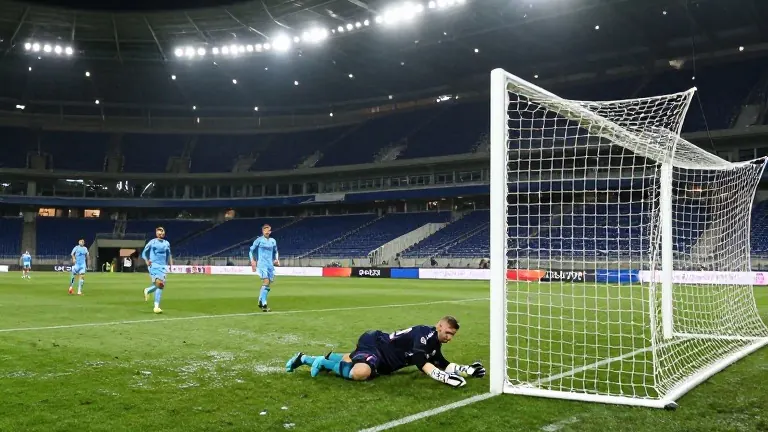
Gianluigi Donnarumma’s shaky performance in Leipzig required his teammates to step in and secure a 3-2 victory for Manchester City. Erling Haaland scored his 13th goal against German clubs in nine meetings, but the win came at the cost of exposing the goalkeeper’s inconsistent form. City’s decision to sign Donnarumma last summer was based on a specific tactical need that has since shifted, leaving the Italian manager with a keeper who is competent but rarely elite.
The club abandoned its long-standing preference for goalkeepers who can distribute the ball with their feet. That policy relied on a possession style that strangled opponents from the final third. The loss of Rodri to an anterior cruciate ligament injury in September 2024 changed that dynamic. City could no longer block counters as effectively, leading to a rise in shots faced. The team allowed 7.5 shots per game in each of the four seasons before the injury. That number climbed to 9.34 in the 2024-25 season and 9.71 in the current 2025-26 campaign. Under new manager Enzo Maresca, the average in the Premier League is now 10.56. In the Champions League, the figure stands at 11 per game.
This increase in pressure meant the club needed a goalkeeper who could keep the ball out of the net. Donnarumma was signed for that specific ability. He had carried Paris Saint-Germain to their first Champions League title with such moments of brilliance. However, his recent performances suggest he is no longer the same player. His frame is 6 feet 5 inches, but his movement and burst have slowed. He has played 553 first-team games over 12 years, and that wear is showing in his agility.
In Leipzig, the outfield players covered for Donnarumma’s mistakes. He let Nicolas Jackson’s shot through his gloves in a previous match at Villa Park. He was also beaten by Desire Doue and Vitinha in a heavy loss to PSG at the Etihad Stadium. Those errors highlighted a lack of maneuverability. In the recent game, he drifted three yards off his line when Riedle Baku was in a crossing position. Baku saw the gap and hit the ball precisely for Leipzig’s first equalizer. Donnarumma could not argue he was unlucky on that play, as replays showed the precise nature of the strike.
Leipzig’s second equalizer came from Antonio Nusa. The Norwegian hit the shot from a position with a 0.2 expected goals value. The post-shot value was 0.65, meaning it was a difficult save for any goalkeeper. Donnarumma might have saved it, but the expectation for a player recruited for his shot-stopping is high. He did make a smart diving save to deny Christoph Baumgartner’s long-range strike earlier in the match.
Over 56 games in the Premier League and Champions League this season, Donnarumma has conceded six fewer goals than the expected goals value of the shots he faced. This metric suggests he is performing at or near the level of a top-tier shot-stopper. In the previous Premier League season, he was one of the better pure shot-stoppers in the league. This season, he remains in that tier. He is fine. He is consistent. He is not the best in the world at keeping the ball out, which is what City paid for.
The team’s current approach tolerates a goalkeeper who offers little in possession because they expect him to be exceptional in defense. Donnarumma is providing the former but only occasionally the latter. The logic of his signing has eroded as the team’s defensive structure has changed. He is not being bought for his ability to progress the ball. He is not being bought for his current level of shot-stopping, which is merely average compared to his peak. The gap between his signing and his current output is the central issue for Manchester City’s defense.
Source: CBS Sports