Burlton residents report worsening Lake Champlain algae despite $928 million cleanup effort
The state has achieved only 35 percent of its 2036 phosphorus reduction target, prompting warnings from the EPA that Vermont is not on track.
By Trevor Wilson ·
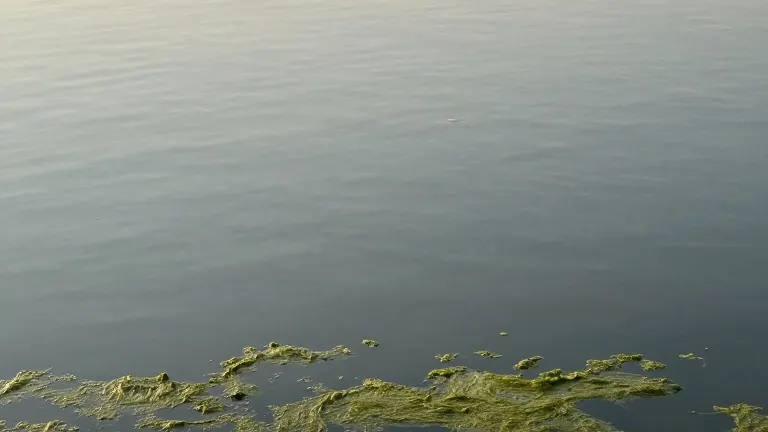
Jeff van den Noort stood at the edge of his property in late August 2026 and watched thick, neon green film swirl across the surface of Lake Champlain. He waded into the water to his ankles and collected a jar of the scum. For van den Noort, a resident of a small island in the lake since 1966, the sight was the worst he had seen all summer.
The lake supplies drinking water to roughly 200,000 people in the region. For decades, blooms of cyanobacteria, commonly known as blue-green algae, have closed beaches, harmed local businesses, and sickened pets. Van den Noort joined a volunteer network that tracks these blooms. He drove his car to four other shoreline locations, collected water samples, recorded weather conditions, and uploaded the data to a public database. "I just don't feel like enough is being done," van den Noort said. "And I think the state needs to take this seriously."
In 2015, Governor Peter Shumlin signed Vermont's Clean Water Act, a response to pressure from the U.S. Environmental Protection Agency. The law promised tighter pollution limits and new funding for water quality projects. By 2016, the EPA had finalized stricter cleanup targets for the lake, with a deadline of 2036. The state has since spent nearly $928 million on various initiatives, including sewage plant upgrades and farm programs.
Despite the spending, progress has stalled. A letter sent last year by the EPA regional administrator warned that Vermont was not on track to meet its 2036 goals. The state would need to more than double its annual pace of phosphorus reduction. According to the most recent state estimates, Vermont has achieved only 35 percent of the required reduction halfway through the two-decade timeline. Eric Perkins, a former EPA official, described the measures taken so far, such as upgrading sewage plants, as low-hanging fruit.
Phosphorus is the primary driver of the algae blooms. It enters the lake from farm fields, stormwater runoff, and sewage systems. Seven of the lake's 15 monitoring stations have exceeded annual phosphorus limits every year since 2015. Four stations recorded higher average phosphorus levels over the past decade than in the previous one. In September, the Vermont Department of Environmental Conservation told the EPA that it is not making enough progress in addressing stormwater runoff. The department also noted that reductions in farm pollution in the Missisquoi River watershed have slowed since 2023.
State officials say the process requires patience. Julie Moore, secretary of the Agency of Natural Resources, stated that the state is moving with the commitments it has made, but the changes are not appearing quickly in the monitoring data. "This is a complex ecosystem, and we need to come at this work with a whole lot of humility," Moore said. Laura DiPietro, the water quality program director for the Agency of Agriculture, Food and Markets, expects greater phosphorus reductions from current programs in the coming decade.
For van den Noort, the wait is becoming difficult. On the worst days, he said, the bay turns completely green as far as the eye can see.
Source: Seven Days · original report published
More News · Burlington news · Report a business · Got a Story?