
Scientists Tag 1,750 Monarchs to Map Texas Migration Routes
New solar-powered trackers, weighing less than a drop of water, are revealing unknown stopover sites for the butterflies crossing the Texas funnel.
By Sophie Lawson ·
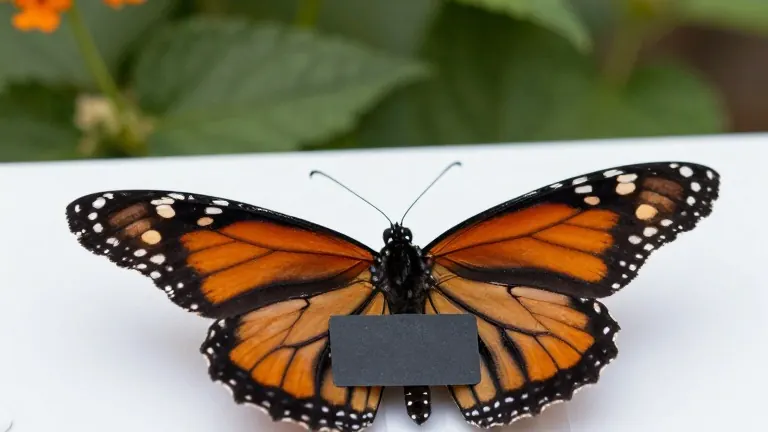
Scientists attached solar-powered radio tags to nearly 1,750 monarch butterflies this year to identify critical stopover locations along their migratory path.
The research team aims to find where the insects rest and feed before those habitats disappear. Rebeca Quiñonez-Piñón, a senior scientist at the National Wildlife Federation, leads a study that combines real-time tracking with community science efforts in Texas.
Monarchs traveling east of the Rocky Mountains pass through a narrow corridor called the Texas funnel each fall. The route varies annually based on the availability of water, nectar, and shelter. The new data helps researchers understand these shifting patterns.
The devices, developed by Cellular Tracking Technologies, cost about $200 each and weigh approximately the same as a drop of water. David La Puma, vice president of global market development for the company, said most tagged butterflies weigh more than 400 milligrams to ensure they are not overburdened. Trained researchers apply the tags using adhesive on the butterfly's abdomen while protecting the insect's legs and antennae.
Emma Pelton, a senior conservation biologist with the Xerces Society for Invertebrate Conservation, noted that previous tracking devices were too heavy for the insects. She said the team is thrilled by the results from the first year of using the new, lighter technology. The data has revealed connections between eastern and western monarch populations that scientists had only hypothesized before.
Since the migration began this year, about 175 tagged butterflies have been detected in central Mexico. The trackers have also recorded monarchs in Utah and along the Eastern Seaboard to Florida. These findings provide evidence of how the butterflies connect different regions during their journey.
Louie Yang, an insect ecologist at the University of California, Davis, described the technology as remarkable but noted its limitations. The system detects where a receiver picked up a signal, not the exact location of the butterfly. It also does not confirm if the insect is still alive after detection. Further studies are needed to determine if the tags impact butterfly behavior.
Eastern monarch populations have dropped more than 80% since the mid-1990s. Tierra Curry, a senior scientist with the Center for Biological Diversity, said climate change and pesticides threaten the species. She explained that prolonged heat in northern areas can delay migration, while droughts dry up essential nectar sources. Conservationists in Texas are installing nets on highways to help butterflies fly higher and planting milkweed to boost local numbers.
Source: WCAX-TV · original report published
More News · Burlington news · Report a business · Got a Story?