Exit polls show Israeli election too close to call
Gadi Eisenkot's bloc edges out Benjamin Netanyahu in a historic vote that may leave Arab parties with the power to choose the next government.
By Trevor Wilson ·
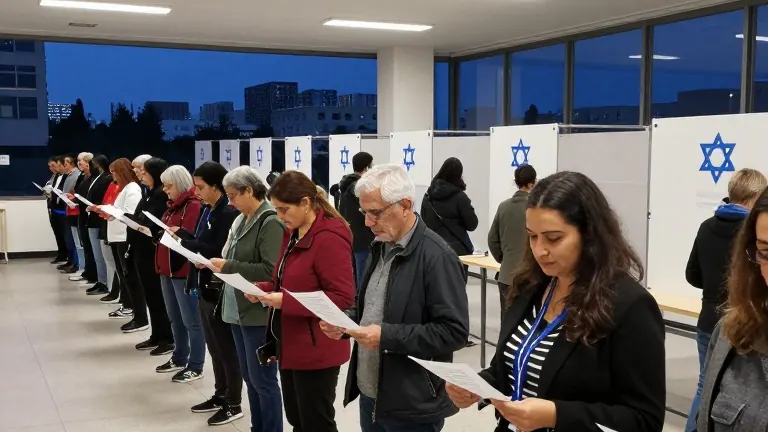
Exit polls released on Tuesday evening indicated that Israel's election was too close to call, with the opposition bloc led by Gadi Eisenkot projected to win a slight majority of Knesset seats over Benjamin Netanyahu's right and far-right coalition. The results suggest that neither side can form a governing majority without additional partners, setting the stage for weeks of coalition negotiations before a prime minister is declared or a new election is called.
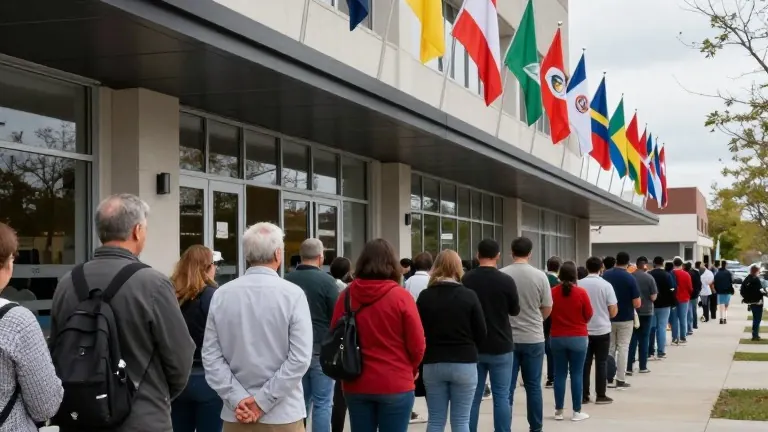
The vote marked the highest turnout in 50 years, driven by a surge in participation among Israeli Arab citizens and serving military members. By 6 p.m. Tuesday, 74.3% of eligible voters had cast ballots, a 9% increase over the previous election. More than 7 million people were eligible to vote, and tens of thousands of Israelis residing abroad arrived at Ben Gurion airport in the days prior to cast their ballots.
Israeli Arab parties are expected to secure up to 18 seats, a figure that positions them as the decisive kingmakers in the fragmented 120-seat legislature. Netanyahu's Likud party is projected to emerge as the largest single party, but the prime minister is likely to fall short of the support needed to form a coalition. Mansour Abbas, head of the Islamist Ra'am party, stated while voting that his party's vote would change the government and expressed hope that turnout in Arab communities would exceed 70%.
The campaign was defined by stark contrasts between the leaders. Netanyahu, who is currently on trial for corruption, employed apocalyptic language to rally support, warning that the Jewish state was on the brink of ruin. He also suggested that the left and Israeli Arabs were attempting to steal the election, a claim the Central Elections Committee rejected after finding no evidence of systematic tampering. His main challenger, Eisenkot, a former chief of staff of the Israel Defense Forces, criticized Netanyahu for relying on familiar tricks and fearmongering.
Netanyahu's far-right coalition partners amplified the tension. Itamar Ben-Gvir, the national security minister, declared that it would be Mansour Abbas's government if Netanyahu and his allies lost. The campaign featured a nuclear explosion image posted by Netanyahu on the eve of the vote, a move that critics described as a scare tactic. The election followed a period of intense conflict, including the war in Gaza that began after the Hamas attack on October 7, 2023, and which has resulted in more than 74,000 Palestinian deaths.
The political landscape remains complex due to the number of small parties involved in the process. The Haaretz editorial urged citizens to vote, stating that Israel had exhausted its diplomatic credit and that its citizens were at their limit. The final outcome will depend on how quickly the various factions can negotiate a stable majority in the Knesset.
The Central Elections Committee confirmed that polling stations closed at the standard 10 p.m. deadline after rejecting a last-minute request to extend voting hours. The committee's decision ended a brief dispute over the timing of the close, solidifying the procedural framework for the night's results.
Source: The Guardian