$12 Million Spent in Michigan and North Carolina House Districts Ahead of Nov. 3 Vote
AdImpact data shows heavy investment in 70 competitive House races as Democrats aim to flip the chamber.
By Sophie Lawson ·
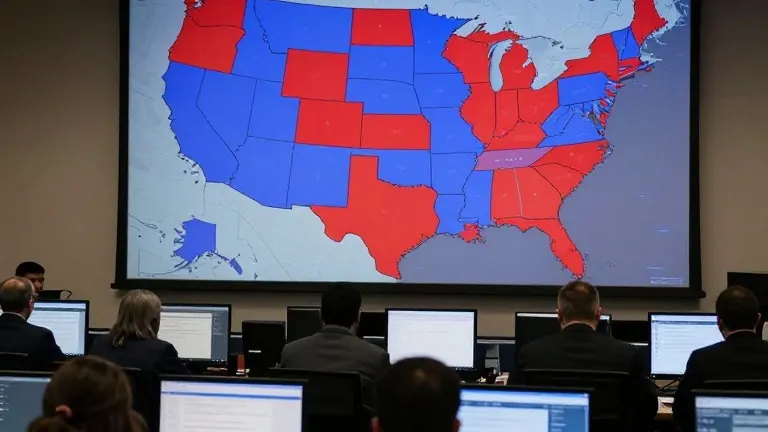
Ad spending in at least 70 House districts has reached six figures from both parties in the final week of the 2026 midterm campaign. The heaviest financial commitments are concentrated in Michigan’s 7th District and North Carolina’s 1st District, where more than $12 million has been allocated to advertising efforts. These two races represent the most expensive contests of the cycle, according to AdImpact data cited in a recent analysis.
The broader spending pattern indicates a shift in the electoral dynamic. Rather than focusing solely on preventing a Democratic takeover, campaigns are investing in districts where the outcome remains uncertain. This includes over $10 million in spending across toss-up districts in Michigan, North Carolina, New York, and Florida. Additional seven-figure ad buys are targeting deep-red communities in Tennessee, Oklahoma, and Arkansas.
The Cook Political Report rates Democrats as favored in 220 seats. The organization lists 17 races as toss-ups and another 30 as leaning toward the Republican Party. Given the current ratings, the Republican hold on the House, which stands at a narrow 218 to 214 advantage, appears likely to change hands. The 2024 presidential election cycle saw narrow margins in many of these areas, which have since shifted toward Democratic candidates in the congressional race.
This shift is evident in four specific districts where voters chose different parties for president and House nominee. These include the seats held by Democratic Representatives Adam Gray of California’s 13th District, Nellie Pou of New Jersey’s 9th District, and Marie Gluesenkamp Perez of Washington’s 3rd District. The fourth is the district of retiring Republican Representative Don Bacon in Nebraska’s 2nd District. AdImpact data indicates that Republicans have reduced their ad reservations in these four districts in recent weeks.
Voter sentiment plays a key role in these competitive calculations. A recent poll conducted by NPR, PBS News, and Marist found that Democrats hold a 10-point advantage among registered voters on the generic congressional ballot. Among likely voters, the Democratic lead is 8 points. Cost of living issues, including rising gas prices and tariffs, remain the top concern for voters. These economic factors are compounded by the ongoing war in Iran.
Redistricting has also altered the competitive map. Following a Supreme Court decision that adjusted the Voting Rights Act, Republicans redrew boundaries to add conservative voters to districts held by Democrats. This affected the seats of Representatives Marcy Kaptur in Ohio, Don Davis in North Carolina, Shomari Figures in Alabama, and Darren Soto in Florida. Democrats made similar adjustments in California, affecting districts held by Republicans James Gallagher, David Valadao, Ken Calvert, and Darrell Issa, as well as independent Kevin Kiley. Currently, only Figures and Soto hold districts that favor Republicans.
The 70 districts with substantial spending from both sides voted for President Trump by an average of 9 points in 2024. Sixty of these districts are listed as priorities by both the Democratic and Republican House campaign committees. This overlap suggests a high level of contested effort in areas where the outcome could swing either way. The data reflects the impact of the Trump administration’s popularity levels with voters over the past year.
Not all races with high spending will result in close elections. Many districts identified by the Democratic Congressional Campaign Committee as in play gave Trump approximately 60% of the vote in 2024. In these areas, ad spending from both parties has been minimal. The final results of the November 3 election will determine whether the current trend of shifting control holds or if the narrow margins result in a split chamber.
Source: Central Florida Public Media