Charlotte Berry Farm Relies on 100-Degree Days and Migrant Crew
Adam Hausmann and Jessica Sanford operate a 57-acre organic farm where extreme weather and rising costs are reshaping their 25-year history.
By Sophie Lawson ·
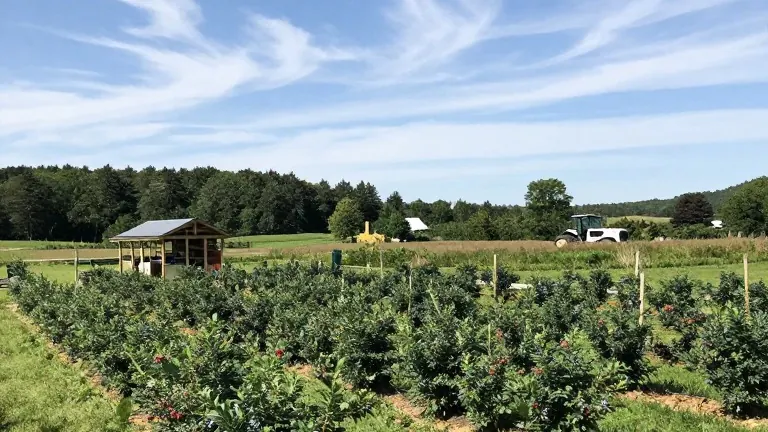
Temperatures in the 90s and 100s are no longer rare in Charlotte, and that heat is changing how Adam Hausmann and his wife, Jessica Sanford, run their farm. For 25 years, the couple has worked their 57-acre organic operation, known as Adam’s Berry Farm. They manage the land year-round, producing primarily blueberries, strawberries, and raspberries.
The heat is just one factor pressuring their bottom line. Sanford says inflation has made diesel, gas, and fertilizer expensive. She notes that consumers often hesitate to pay $10 for a pint of strawberries, even though production costs suggest the price should be higher. At some point, she said, the product becomes unattainable to customers.
To manage these rising costs, the farm has invested in more machinery. As they plan future plantings, they are choosing varieties that can be mechanically harvested. This approach provides insurance during climatic events where fruit must be picked in very short windows to avoid loss.
The farm employs a returning crew of six men from Guatemala. These workers are on the farm from early May until November. Sanford says the farm would not be possible without them. They work in the U.S. under H-2A visas, a temporary agricultural worker status that saw nearly 400,000 participants nationwide last year.
Sanford also owns a flower business called Pollen and Nectar, which works in collaboration with the farm. She says the changing climate has had major impacts on what they can grow and how they do it. She noted that people in the area never used to have days in the 90s or 100s, but everything is now more extreme.
The couple sells their produce through several channels. The bulk of their income comes from wholesale. Distributors like the Intervale Food Hub, ACORN, and Farmers to You help keep their products within a 30-mile radius. A few select businesses in Boston and New York also carry their items. Their farm stand in Charlotte, City Market, Healthy Living, and the Middlebury Co-op also stock their berries.
A pick-your-own program offers berries and flowers to the public. This direct sales method provides only around 10% of the farm’s total sales. Sanford says it is still worth it because it exposes people to local agriculture. She describes the farm as a gateway into local food for those who rarely step foot onto such properties.
Hausmann says the constant change in farming keeps the work exciting and engaging. He values the intellectual side of dealing with the natural world. Sanford says the life brings joy and meaning, despite the trials. She notes that while they are money poor, they are rich in many ways.
Sanford emphasizes that farming is not the only way to be involved in agriculture. She points to fields like agricultural policy, land conservation, and market development as avenues that help farmers. She says chefs, restaurants, and markets reach people in different ways beyond just growing food.
Source: The Other Paper / Vermont Cynic · original report published
More Business · Burlington news · Buyer Beware · Report a business · Got a Story?