7 Million Los Angeles Residents Breathed Lead at 80 Times Background Levels During 2025 Fires
A new study reveals that smoke from the Eaton Fire contained toxic heavy metals at concentrations far exceeding those found in typical wildfires.
By Sophie Lawson ·
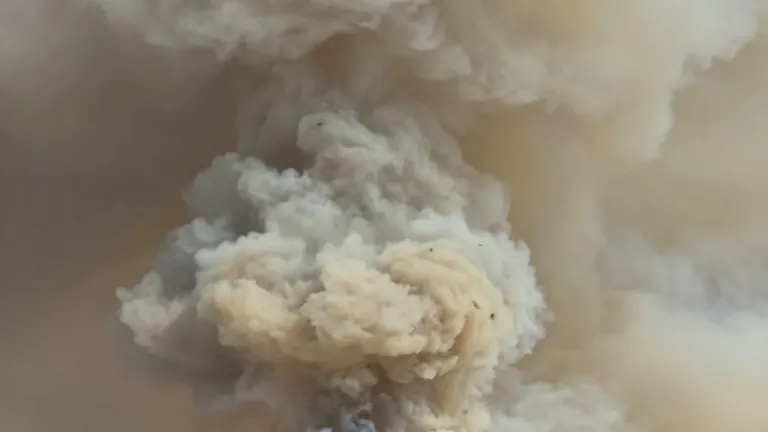
Researchers report that 7 million people in Los Angeles were exposed to lead levels 80 times higher than typical background rates during a single 24-hour period in January 2025. The findings come from a study published Wednesday in the journal Science Advances.
Scientists at the California Institute of Technology analyzed data from the Atmospheric Science and Chemistry mEasurement NeTwork, known as ASCENT. This network monitors the size and chemical composition of airborne particles in real time. The team used this technology to examine the smoke from the Eaton Fire in Altadena.
Nga Lee Ng, an author of the study, stated that urban smoke is fundamentally different from wildfire smoke. She explained that the new monitoring tools allowed the team to see the detailed components of the particles people were breathing. The research compared the Eaton Fire plume to smoke from a 2024 wildfire in Riverside County that burned mostly vegetation.
The Eaton Fire plume contained 50 times more lead, three times more arsenic, and seven times more halogens than the vegetation fire. Halogens include chlorine and bromine, which often come from burning vehicles, building materials, and electronics. The Eaton Fire destroyed more than 16,000 structures, releasing these stored chemicals into the air.
Haroula Baliaka, a co-author, noted that understanding these chemical differences helps close a gap in current research. As urban growth and warmer, drier weather push fires into cities, emergency response and monitoring systems must adapt. The study provides specific data on how urban fuels change the toxicity of smoke.
Experts outside the study said the results align with their expectations. Ed Avol, a professor emeritus at the University of Southern California, said the high levels of heavy metals were consistent with what he expected. However, he called the findings surprising because scientists had not previously documented this specific type of exposure in such detail.
Yaguang Wei, an assistant professor at Mount Sinai, agreed that the findings were not surprising. He pointed out that fires burn lead found in wall paint, plastics, and electronics. Wei said the study has important policy implications, suggesting governments should invest in better monitoring and public alerts. He also recommended more prescribed fires to reduce future risks.
The Eaton Fire and the Pacific Palisades fire ignited on January 7, 2025. At least 31 people died, and thousands of structures burned. Lead is a neurotoxin that can affect children's development and increase blood pressure in adults. Scientists continue to study how short-term, high-level exposure impacts human health.
Source: WCCB