AI texters reach 3 million voters in midterms
Campaigns report high engagement rates, but new research suggests persuasion effects fade within weeks of the initial chat.
By Trevor Wilson ·
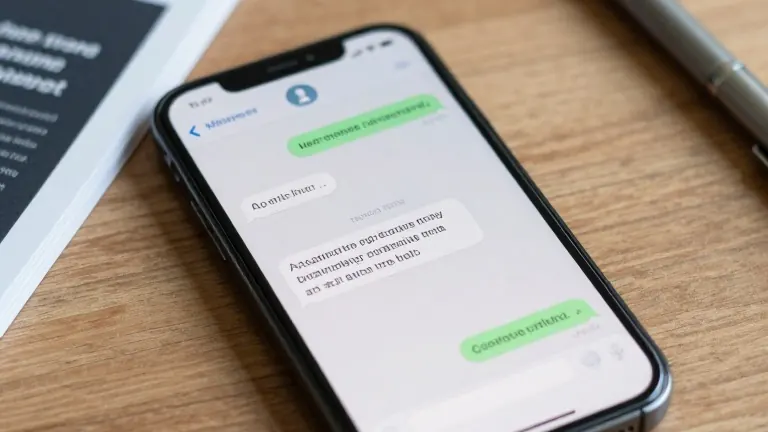
Vector Political, a Democratic firm, sent more than 3 million text messages to voters this election cycle. Those messages generated over 35,000 individual conversations with constituents. This volume exceeds the capacity of traditional human canvassing teams.
The technology relies on large language models, the same software behind popular chatbots like Claude and Gemini. Campaigns load these models with specific materials, such as speeches and press releases, to keep the conversations on topic. The agents then engage voters via text, asking questions and recording responses. They can hold thousands of these chats in a single day.
Ace Parsi, a Democrat running in West Virginia, described his decision to use the tool as difficult. He is racing against Republican Rep. Riley Moore in a district with a strong Republican lean. Parsi called the decision the most complex of his campaign. His team uses the chatbots to connect with voters who may not answer their phones. "We center so much of our conversation on making sure that people feel seen and listened to," Parsi said. "So we thought, 'OK, well, this is another tool to be able to do that.'"
Research published in the journal Nature found that these AI conversations can shift voter opinions more than political ads. The study examined elections in the United States, Canada, and Poland. In the U.S. test, chatbots advocating for Kamala Harris moved Trump supporters 4 points on a 100-point scale. Chatbots for Donald Trump moved Harris supporters 2.3 points. David Rand, a professor at Cornell University and an author on the study, noted that the chatbots were more effective than video ads from previous cycles. However, the effect faded over time. Only slightly more than a third of the initial shift remained in follow-up surveys conducted a month later.
A separate study in the journal Science examined the accuracy of 19 different language models across 91,000 conversations. The research found that accuracy decreases as the bots become more persuasive. Campaigns often receive full transcripts of these chats, which raises privacy concerns. Most states do not require voters to be informed they are texting with an AI. Katie Harbath, CEO of Anchor Change, said campaigns are still in the experimental stage with this technology.
Marty Santalucia, a partner at Vector Political, said the firm trains its agents to mimic deep canvassing techniques. This involves extended listening and empathetic engagement. The goal is to make voters feel understood. Santalucia stated that 10% to 20% of people who reply stay in the conversation for at least an hour. This duration allows the bot to explore issues deeply. He described one exchange where a voter shared a personal story about her parents' racism. The voter later told the bot, "You asked the right questions and I decided to let somebody in."
Campaigns use the data collected to prioritize outreach. Convos.ai, a vendor for these tools, rates voters from 0 to 100. A score of 100 indicates strong support, while 0 indicates opposition. Parsi’s campaign sent 23,000 texts and received about 400 substantive replies, a response rate of 1.7%. Parsi personally called voters who expressed concern about the tool. He said he often contacted those who disagreed with him to ensure his strategy respected diverse viewpoints.
The next step for many campaigns is to follow up with human outreach. Parsi’s team plans to use the AI conversations to inform their phone banking efforts. The technology allows for a scale of contact that was previously impossible for individual candidates. It provides a detailed map of voter sentiment that human volunteers alone cannot produce.
Vendors like Convos.ai and Vector are adjusting their services based on these early results. They are refining how the bots handle follow-up questions and data recording. The focus is on balancing persuasion with accuracy to maintain trust with the electorate.
Source: CBS News
More Business · Buyer Beware · Report a business · Got a Story?